Wednesday, 18 May 2011

Week 11: State - Maryland (and Washington D.C.)

Maryland, the first state south of the Mason-Dixon line on this trip, was in 1790 chosen as the location of the nations new capital when George Washington, the first President of the United States, selected land to be ceded to the District of Columbia for the creation of the Federal Capital, renamed Washington, D.C. the following year in his honour. Although the District is not part of any U.S. state and is instead directly overseen by the federal government, it currently sits solely on land ceded by Maryland as the land also provided by Virginia was retro-ceded back to the state in 1846. Located within the district are The White House, the centres of all three branches of the U.S. federal government, the J. Edgar Hoover Building (headquarters of the FBI), many national museums and war memorials, the Lincoln Memorial and Thomas Jefferson Memorial, the historic Ford's Theatre (site of the assassination of President Abraham Lincoln), the Washington Monument, and the the National Archives which houses the Declaration of Independence, the United States Constitution, and the Bill of Rights. Washington, D.C. also hosts 174 foreign embassies as well as the headquarters of the World Bank.

Outside of the cities and suburbs surrounding Washington, DC, the majority of the population of Maryland is located in and around Maryland's most populous city, Baltimore, the largest independent city in the United States (in not being part of any county). Baltimore is also the largest U.S. seaport in the Mid-Atlantic and was once the second leading port of entry for immigrants to the United States. During the War of 1812, the British military attempted to capture the port, which was protected by Fort McHenry, and it was during this bombardment that Francis Scott Key, a Maryland lawyer aboard a British ship where he had been negotiating for the release of an American prisoner, witnessed the bombardment and later wrote "The Star-Spangled Banner", a poem recounting the attack, which was later set to music and became the official National Anthem of the United States in 1931. The state as a whole has a booming economy led by the computer industry and scores of federal government jobs in and around the Washington area. As a result Maryland households are currently the wealthiest in the country, with a 2009 median household income of $69,272 (ahead of New Jersey and Connecticut), and the poverty rate is the lowest in the country. Maryland is known alternately as Little America, due to the diverse variety of its topography (despite the absence of any natural lakes), The Old Line State, or The Free State. The capital is Annapolis.

Notable films set in and around Washington, D.C. include, aside from all the numerous depictions of historical and fictional U.S. Presidents, All the President's Men (based on the Woodward and Bernstein reporting of the Watergate scandal for the Washington Post), The Exorcist (set in Georgetown), Mr. Smith Goes To Washington and Minority Report, as well as the T.V. Shows The West Wing, and The X-Files. In rural Maryland The Blair Witch Project is set in and around the town of Burkittsville, whilst films set in Baltimore include 12 Monkeys and The Accidental Tourist. Baltimore native Barry Levinson has set a series of films in Baltimore (Diner, Tin Men, Avalon and Liberty Heights), as has fellow resident John Waters who parodies the city extensively in his films (Pink Flamingos, Hairspray). The acclaimed crime dramas Homicide: Life On the Street and The Wire are also both set in Baltimore. Contemporary writers based in Baltimore include Anne Tyler, author of The Accidental Tourist, and Tom Clancy (the film adaptation of his novel The Sum of All Fears features the destruction of Baltimore by a nuclear bomb). For my choice of novel at first I was tempted to cheat and go with The Exorcist, which is set in Georgetown in Washington, but having felt that I've read too many books lately which have been turned into films I've already seen I've decided to go with one by Anne Tyler.


A Patchwork Planet was first published in 1998 and like many of Anne Tyler's novels is set in Baltimore. I've read the book over the last week and as I've fallen behind schedule I won't be posting a separate review. It's not the kind of book I would normally read and I found her writing a little too whimsical for my tastes, though I understand this is part of the appeal to her fan base and A Patchwork Planet has been largely praised elsewhere. It's also the first book on this trip where I've felt the setting hasn't played a large role as a character in the story. The plot focuses on a divorced 30-year-old former juvenile from Baltimore who has proved to be a disappointment to his affluent family from Guilford by not amounting to anything more than his dead-end career as a handyman for the elderly. Guilford is a distinctive residential neighbourhood in the northern part of Baltimore comprising of 680 family dwellings ranging from modest homes to stately mansions, many with swimming pools, extensive landscaping and old-fashioned streetlights. There are also a number of scenes set in Penn Station, the main train station in Baltimore (built 1911) and the eighth busiest rail station in the United States.

Next: West Virginia

Tuesday, 10 May 2011

Delaware and Fight Club by Chuck Palahniuk (1996)

Wilmington, the largest city in the state of Delaware, and the setting for Chuck Palahniuk's 1996 novel Fight Club, has a longstanding reputation as an attractive hub to businesses and corporations due to its efficient judicial system and pro-business finance laws, including laws protecting Delaware chartered corporations from hostile takeovers and The Financial Center Development Act of 1981 which removed the cap on interest rates that banks may legally charge customers. As a result Wilmington has become a national financial center for the credit card industry. Many major credit card issuers, including Bank of America, Chase Card Services, and Barclays Bank of Delaware are headquartered in Wilmington, as are the American operations of the United Kingdom's HSBC. All this goes some way to explaining why Chuck Palahniuk had Wilmington in mind when he wrote Fight Club, with its anti-consumer culture themes and scenes of organised "mischief" directed against large corporations. Although the book never explicitly states where it is set, there are clues peppered throughout, though much more prominently so in the 1999 David Fincher film adaptation (the narrator's business card includes the suburban Wilmington zip code 19808 and the Delaware area code 302, his apartment building Pierson Towers has as its motto "A Place to Be Somebody" - the city motto for Wilmington, Delaware state flags, Delaware license plates, and the other cities mentioned as starting up new fight clubs include New Castle, Delaware City, and Penns Grove, NJ, which are all very close to Wilmington).


I enjoyed Fight Club as a fast-paced, blackly-comic entertaining read. The film, which I have seen on numerous ocassions, is incredibly faithful to the source material (whole sections of dialogue are lifted from the page), albeit more streamlined and linear, and at times the book even reads like a treatment for the film, with its concise prose effectively satirising the bite-size slogans of large corporations. Despite all this though I don't feel the book is as significant as the film which, released in 1999, came at a point when independent cinema in American had grown stagnant with lazy Tarantino imitations and helped, along with a number of other independent films released the same year (most notably Being John Malkovich), breathe new life into American cinema. Although the film was not a success on its original cinema run (due to a studio who didn't know how to market it), its reputation on DVD grew to the cult classic it now stands as. Chuck Palahniuk is a thoughtful and witty writer but it is debatable whether he would have achieved the subsequent success he has were it not for the boost the film gave him (all susequent attempts to adapt his work for the screen have stalled at the development stage, with the exception of the box office failure Choke).

Next: Maryland

Thursday, 5 May 2011

Week 10: State - Delaware

Delaware, known as The First State for being on December 7, 1787 the first state to ratify the Constitution of the United States, is the second smallest of the fifty states (and the 45th most populous), ahead only of Rhode Island in size. Today Delaware is primarily known as the most corporate business-friendly state in the country. Its Court of Chancery (one of the few remaining in the nation, which has jurisdiction over equity cases and corporate disputes) and the Delaware General Corporation Law have formed a worldwide reputation for granting broad discretion to corporate boards of directors and giving great flexibility to corporations to manage their affairs. For these reasons, a great number of companies are incorporated in Delaware (over 50% of US publicly traded corporations and 60% of the Fortune 500 companies), including 60% of the companies listed on the New York Stock Exchange. Aside from its beaches and tax-free shopping Delaware does not thrive on tourism (the Visit Delaware website boasts "Delaware, We're not far from where you are!"), and in addition to being the only state without a commercial air service, it has no places designated as national parks, national seashores, national battlefields, national memorials, or national monuments. There are also no network broadcast-television stations operating solely in Delaware. Wilmington is the state's largest city and its economic hub, and the state capital is Dover.

I was worried early on that there were no good books set in Delaware. In fact in terms of films set in the state I have yet to find any I have heard of either: Trigger Man (2007) or Wrestling (2008) anyone? I consulted some other forums undergoing similar endeavors and most of them had skipped the state altogether. Not wanting to be beaten so easily I did a little bit more research and eventually found a book that, although it never states directly where it is set, I have on good authority is set in the city of Wilmington.


Fight Club was published in 1996 and was Chuck Palahniuk's first novel. It was later turned into a 1999 film by David Fincher, and to prove it's set in Delaware here's a direct quote from Fincher's DVD audio commentary:

00:25:35: "The book takes place in Wilmington, Delaware, because that’s like a headquarters for a lot of credit card companies. We wanted to make the film take place in Wilmington, Delaware, but there’s some kind of clearance issues if it’s a specific town then you have to get clearances for specific names, streets, you know, apartment buildings."

Review to follow this week...

Wednesday, 4 May 2011

Pennsylvania and Rabbit, Run by John Updike (1960)

Pennsylvania’s John Updike, as with New Hampshire’s Grace Metalious and Peyton Place, is another writer who has taken the places and people that he grew up surrounded by and has moulded them into a work of fiction. Thus, in 'Rabbit, Run' Reading in south-eastern Pennsylvania where Updike was born - the fifth most populous city in the state - becomes Brewer, and the borough of Mt. Penn becomes Mt. Judge, as does the nearby mountain peak after which it is named. The most famous landmark of Mt. Penn is the Pagoda Hotel, renamed in Updike’s fictional world as the Pinnacle Hotel, a Japanese-style novelty building built in 1908 which somehow managed to withstand anti-Japanese sentiment during World War II and now stands as a symbol of the city of Reading.


Updike described Reading as “a grand place—thriving downtown, factories pouring out smoke and textiles and steel and pretzels and beer. It was a town that made things. It was a muscular, semi-tough kind of place.” And likewise ‘Rabbit, Run’ is a tough, unsentimental book that I enjoyed much more so than The Witches of Eastwick (see Rhode Island). The story deals with 26-year old former high-school athletics star Harry “Rabbit” Angstrom who walks out on his dead-end job, his alcoholic pregnant wife and young son, and takes up with a prostitute. Updike makes no attempt to glamorise his protagonist or portray him as a Holden Caulfield-esque anti-hero, and the book was written as a response to On The Road in portraying the hurt that is brought to those around you if you try to walk away from your life. Updike is a writer who likes to beautify or poeticise the mundane, and whereas writers dealing with similar themes such as Fante or Bukowski could be seen as the anti-Updike, in that the simplicity of their prose (which I personally love) reflects the normalcy of the situations, Updike writes in a much weightier prose, which can be tortuous at times but is aided by the fluidness of the present tense - one of several well regarded, early usages of the style. Updike returned to the character of Rabbit in the sequels Rabbit Redux (1971), Rabbit Is Rich (1981), Rabbit at Rest (1990), and Rabbit Remembered (2001). The book was also adapted into a little seen 1970 film starring James Caan as Rabbit and was also the key inspiration for the 2002 Eminem film 8 Mile (the screenplay opens with a quote from the film "If you have the guts to be yourself...other people'll pay your price," the main protagonist is nicknamed “Rabbit”, the film opens with the character moving in with his alcoholic mother after having dumped his pregnant girlfriend, and the last song on the soundtrack is called “Rabbit Run”).

Next: Delaware

Tuesday, 26 April 2011

Week 9: State - Pennsylvania

Pennsylvania, arguably the most historically important state in the founding of the United States, is known as the Keystone State, due both to its central location among the original Thirteen Colonies, and also because of the number of important American documents signed in the state (including the Declaration of Independence). Philadelphia even served as the temporary capital of the United States from 1790–1800 while the Federal City was under construction in the District of Columbia. Pennsylvania also played a large role in the American Civil War, and the Battle of Gettysburg, fought in and around the town of Gettysburg from July 1–3, 1863, was the battle with the largest number of casualties in the war, and is often described as the war's turning point. The largest city in the state is Philadelphia (1.5 million people as of 2010), the City of Brotherly Love, and the fifth most populous city in the United States. Philadelphia was the site of the first medical school in the country (founded 1765 at the college of Philadelphia), the first nationally chartered bank (the Bank of North America, founded 1781), the first art school and museum (Pennsylvania Academy of the Fine Arts founded 1805), and the first zoo in the United States (opened 1874). Today Philadelphia has more public art than any other American city, and has played a prominent role in popular music, hosting the American end of the 1985 Live Aid concert at John F. Kennedy Stadium and the 2005 Live 8 concert at Ben Franklin Parkway, named, as with the Ben Franklin Bridge, after Philadelphia's most famous resident, who ran away to the city at the age of 17. Pennsylvania is also the snack food capital of the world. It leads all other states in the manufacture of pretzels and potato chips, and the U.S. chocolate industry is centered in the town of Hershey which, orginally named Derry Church, was renamed Hershey in 1906 after the growing popularity of Hershey's Chocolate. The second largest city is Pittsburgh, known as "The Steel City" for its history as a steel manufacturing base, and the capital is Harrisburg.

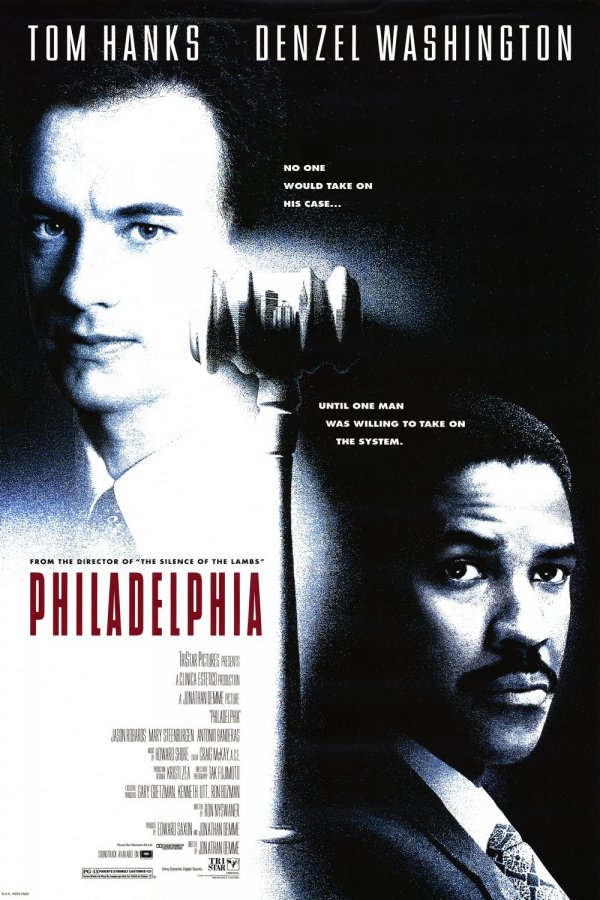
Of films set in the state those set in Philadelphia include (obviously!) Philadelphia and The Philadelphia Story, as well as Rocky and all its sequels (its most famous sequence being when Stallone runs up the long flight of steps to the Philadelphia Museum of Art, one of the largest art museums in the United States). Adventureland and Flashdance are both set in Pittsburgh while George Romero's Night of the Living Dead and its many sequels are all set in and around the city. Outside of the main cities The Deer Hunter is set in Clairton, Allegheny County, Groundhog Day is set in Punxsutawney during its now famous Febuary 2nd holiday of the same name, while the US version of the popular television comedy The Office is set in the real town of Scranton. Pennsylvania is also the birthplace of author John Updike who I have already come across once on this trip in Rhode Island when I dismissed his The Witches of Eastwick as the book I have enjoyed the least so far. However, I have decided to return for a second go at this writer with his breakthrough 1960 novel Rabbit, Run.


Harry "Rabbit" Angstrom is Updike's most famous creation, featuring in four novels and one novella, all of which take place in the fictional city of Brewer, Pennsylvania - a city which shares many characteristics with Reading where Updike was born and raised. The quote on the back from the Observer states "It is sexy, in bad taste, violent and basically cynical". Sounds great.

Review to follow this/next week...

New Jersey and American Pastoral by Philip Roth (1997)

American Pastoral is the posthumous narrative of the life of fictional former high-school sports star Seymour "The Swede" Levov, born and raised in the Weequahic neighborhood of Newark where Philip Roth himself grew up (the novel is narrated by Roth's alter-ego Nathan Zuckerman). While Weequahic was a largely middle class Jewish neighborhood prior to the 1960s (when Roth would have been living there) the demographic makeup of the area, as was the case with the rest of Newark, was altered radically following the 1967 Newark riots, an event that provides a dramatic backdrop to the unfolding story as Seymour Levov stands his ground against the riot that is tearing his own family apart. The 1967 Newark riots were a major civil disturbance that occurred between July 12 and July 17, 1967 when a large number of African-Americans, feeling largely disenfranchised, powerless and subject to police brutality, took to the streets after a rumour spread that John H. Smith, a black cabdriver, had been killed in police custody following his arrest for improperly passing a police car. The six days of rioting, looting, and destruction left 26 dead, 725 injured and led to close to 1,500 arrests. Property damage exceeded $10 million. Although in American Pastoral Seymour Levov, who has taken over his father's glove factory "Newark Maid", bravely refuses to flee during the riots, he, like many other industries based in the city, eventually moves his factories out of the city. The 1967 riots resulted in a significant population loss of both white and black middle classes and the city lost over 100,000 residents between 1960 and 1990. Poverty remains a consistent problem in Newark, despite its revitalization in recent years.


American Pastoral is a speculative study of a life, as imagined by Nathan Zuckerman, and whilst the plot sounds like prime political thriller material along similar lines to the 1999 film Arlington Road - the teenage daughter of a perfect middle-class suburban family becomes a wanted terrorist in hiding - the plot is merely a thin clothesline on which Roth hangs his lengthy meditations on the many changes that American life underwent during the 1960s and 1970s. So along the way we get extended meticulous digressions on everything from the glove-making industry to cattle-breeding and beauty pageants and more besides. It can be a trying read if you‘re one for plot-driven fiction and it is no surprise that with few possible exceptions Roth has never been truly successfully adapted for the screen - as this is his style. Roth is a highly astute writer in both his very precise prose and big ideas but I would never recommend him as a gripping read.

Next: Pennsylvania

Tuesday, 19 April 2011

Week 8: State - New Jersey

New Jersey, known famously as The Garden State, is the second Mid-Atlantic state on this trip. The 4th smallest state it lies entirely within the metropolitan areas of New York City and Philadelphia making it the most densely populated state in the United States (8.7 million people). It is also the second wealthiest behind Connecticut in terms of median income and has the highest percentage of millionaire households, although the largest city in the state, Newark, is the fourth poorest city in America and poverty has been a long standing issue in the industrial cities of the north (the more affluent communities are all in the suburbs of New York and Philadelphia). New Jersey is home to more scientists and engineers per square mile than anywhere else in the world, and is the resting place of Thomas Edison who built his first industrial research laboratory in Menlo Park in the town of Raritan, which changed its name to Edison in 1951 in his honor. Edison also did most of his work in developing motion picture technology at his laboratory in the town of West Orange where he constructed the Black Maria - the first motion picture studio in 1893. New Jersey is also the home state of Frank Sinatra, who was born in Hoboken, and Bruce Springsteen, who hails from Freehold and has sung of New Jersey life throughout his career. Historically New Jersey was the site of the first Miss America Pageant (1921 in Atlantic City), the first drive-in movie theatre (1933 in Camden), and in 1937 witnessed the destruction of the LZ 129 Hindenburg passenger airship when it caught fire in attempting to dock at the Lakehurst Naval Air Station. The George Washington Bridge connecting Fort Lee, New Jersey to New York City is the world's busiest bridge in terms of vehicular traffic, and the New Jersey Turnpike, which features heavily in the opening titles of The Sopranos, is the best known toll road in the country. The capital is Trenton.

Films set in New Jersey include most of the output of Kevin Smith (his first three films, Clerks., Mallrats and Chasing Amy, were dubbed the "New Jersey Trilogy"), Garden State, The Wrestler (Elizabeth, Union County), and Be Kind Rewind (Passaic, Passaic County). Several television series have also been set in the state, most notably the HBO series The Sopranos and Boardwalk Empire, the latter set in prohibition-era Atlantic City, home to the longest boardwalk in the world. The most celebrated New Jersey novelist would have to be Philip Roth, who has set the majority of his books in the state, many semi-autobiographical and examining middle-class Jewish American life in and around the city of Newark where he was born in 1933 and raised. To date I have read only one novel by Philip Roth - Portnoy's Complaint (1969) - the novel that made his name, so in this instance I have gone with the book that won him the Pulitzer Prize, American Pastoral.


American Pastoral, first published in 1997, is part of the Zuckerman (Roth's alter-ego) series of novels and focuses on the life of Newark athletics star Swede Levov and the tragedy that befalls him when his teenage daughter transforms into a domestic terrorist. Set against the backdrop of the Vietnam war during the late 1960s it takes place mostly within the city of Newark and the ficticious town of Old Rimrock, New Jersey.

Review to follow this/next week: